

THE POSITION
Within Tender & Engineering, you will work on the further development of Soilbalance, an existing tool for planning transport and soil movements. Major infrastructure projects involve many different soil flows. Soil is excavated, stored, transported, reused, supplied and processed. An efficient method and optimisation of these flows can contribute to better, more cost effective and more sustainable project execution. The assignment focuses on making Soilbalance more reliable and practical for the preparation and execution of projects. You will investigate different optimisation methods and translate your findings into improvements that work in practice. This means your graduation research will have a direct place within a real engineering environment.
YOUR IMPACT
With your research, you will help us better understand how data and models can contribute to the planning of soil movements. You will test different approaches and compare the results with real life data from different projects. You will investigate production rates, transport capacities, equipment capacities, project dependencies and uncertainties, among other things. You will also look at how current project data can be used to monitor progress, predict results and replan soil flows. You will work together with engineers and other colleagues involved to test your ideas in practice. The result will be a stronger Soilbalance model and clear recommendations for future projects. Your main activities will include:
- Researching existing models for soil logistics and transport optimisation and relevant planning methods.
- Analysing and improving the current planning and optimisation method used by Soilbalance.
- Incorporating realistic production rates, capacities, dependencies and project conditions.
- Investigating how project data can be used for monitoring, predictions and replanning.
- Testing the approach with a real project case and assessing the results and practical value.
YOUR WORKPLACE
You will work within Tender & Engineering in Rotterdam. This is where engineering, project experience and digital solutions come together. Engineers know the reality of major infrastructure projects and are happy to think along with new ideas. You can ask questions, explore different approaches and discuss your results with people who work with these projects every day. This is how you discover how technical research can grow into a solution that can create value in practice.
At Van Oord, different disciplines work together on projects that shape the future of infrastructure. We combine technical knowledge with practical experience and trust each other to take responsibility. There is room to explore ideas, test them and learn from them. Together, we work on solutions that contribute to a better future.
ABOUT YOU
A curious and analytical approach suits this graduation assignment well. You enjoy first understanding a complex problem and then investigating different solutions. For you, conducting research independently goes hand in hand with discussing ideas and results with others. You are interested in the combination of data, engineering and the practice of infrastructure projects. You can also explain and substantiate your findings clearly. In addition, you bring:
- A relevant bachelor's or master's degree in civil engineering, transport, logistics, data science, applied physics, maritime engineering, mechanical engineering or a similar field.
- Experience with programming and modelling and an interest in optimisation and data driven modelling.
- An interest in planning, soil movements, transport logistics and the use of project data.
- The ability to conduct research, compare different methods and test results using data.
- Fluency in both Dutch and English.
WE OFFER
This graduation assignment gives you the opportunity to apply your academic knowledge to a real engineering challenge. You will work on a tool that can contribute to smarter decisions on major infrastructure projects. This means you will see how your research goes beyond your thesis and can create value in practice.
- A graduation internship allowance.
- Intensive guidance from experienced engineers.
- Communities to join, such as Young Van Oord, Van Oord Women and the Van Oord staff association.
- Various events and sports activities, such as skiing, sailing weekends, cycling and motorcycling.
.png)
THE POSITION
Within Tender & Engineering, you will work on the further development of Soilbalance, an existing tool for planning transport and soil movements. Major infrastructure projects involve many different soil flows. Soil is excavated, stored, transported, reused, supplied and processed. An efficient method and optimisation of these flows can contribute to better, more cost effective and more sustainable project execution. The assignment focuses on making Soilbalance more reliable and practical for the preparation and execution of projects. You will investigate different optimisation methods and translate your findings into improvements that work in practice. This means your graduation research will have a direct place within a real engineering environment.
YOUR IMPACT
With your research, you will help us better understand how data and models can contribute to the planning of soil movements. You will test different approaches and compare the results with real life data from different projects. You will investigate production rates, transport capacities, equipment capacities, project dependencies and uncertainties, among other things. You will also look at how current project data can be used to monitor progress, predict results and replan soil flows. You will work together with engineers and other colleagues involved to test your ideas in practice. The result will be a stronger Soilbalance model and clear recommendations for future projects. Your main activities will include:
- Researching existing models for soil logistics and transport optimisation and relevant planning methods.
- Analysing and improving the current planning and optimisation method used by Soilbalance.
- Incorporating realistic production rates, capacities, dependencies and project conditions.
- Investigating how project data can be used for monitoring, predictions and replanning.
- Testing the approach with a real project case and assessing the results and practical value.
YOUR WORKPLACE
You will work within Tender & Engineering in Rotterdam. This is where engineering, project experience and digital solutions come together. Engineers know the reality of major infrastructure projects and are happy to think along with new ideas. You can ask questions, explore different approaches and discuss your results with people who work with these projects every day. This is how you discover how technical research can grow into a solution that can create value in practice.
At Van Oord, different disciplines work together on projects that shape the future of infrastructure. We combine technical knowledge with practical experience and trust each other to take responsibility. There is room to explore ideas, test them and learn from them. Together, we work on solutions that contribute to a better future.
ABOUT YOU
A curious and analytical approach suits this graduation assignment well. You enjoy first understanding a complex problem and then investigating different solutions. For you, conducting research independently goes hand in hand with discussing ideas and results with others. You are interested in the combination of data, engineering and the practice of infrastructure projects. You can also explain and substantiate your findings clearly. In addition, you bring:
- A relevant bachelor's or master's degree in civil engineering, transport, logistics, data science, applied physics, maritime engineering, mechanical engineering or a similar field.
- Experience with programming and modelling and an interest in optimisation and data driven modelling.
- An interest in planning, soil movements, transport logistics and the use of project data.
- The ability to conduct research, compare different methods and test results using data.
- Fluency in both Dutch and English.
WE OFFER
This graduation assignment gives you the opportunity to apply your academic knowledge to a real engineering challenge. You will work on a tool that can contribute to smarter decisions on major infrastructure projects. This means you will see how your research goes beyond your thesis and can create value in practice.
- A graduation internship allowance.
- Intensive guidance from experienced engineers.
- Communities to join, such as Young Van Oord, Van Oord Women and the Van Oord staff association.
- Various events and sports activities, such as skiing, sailing weekends, cycling and motorcycling.
Interested in this
vacancy?
you more:
Lisa Stronk
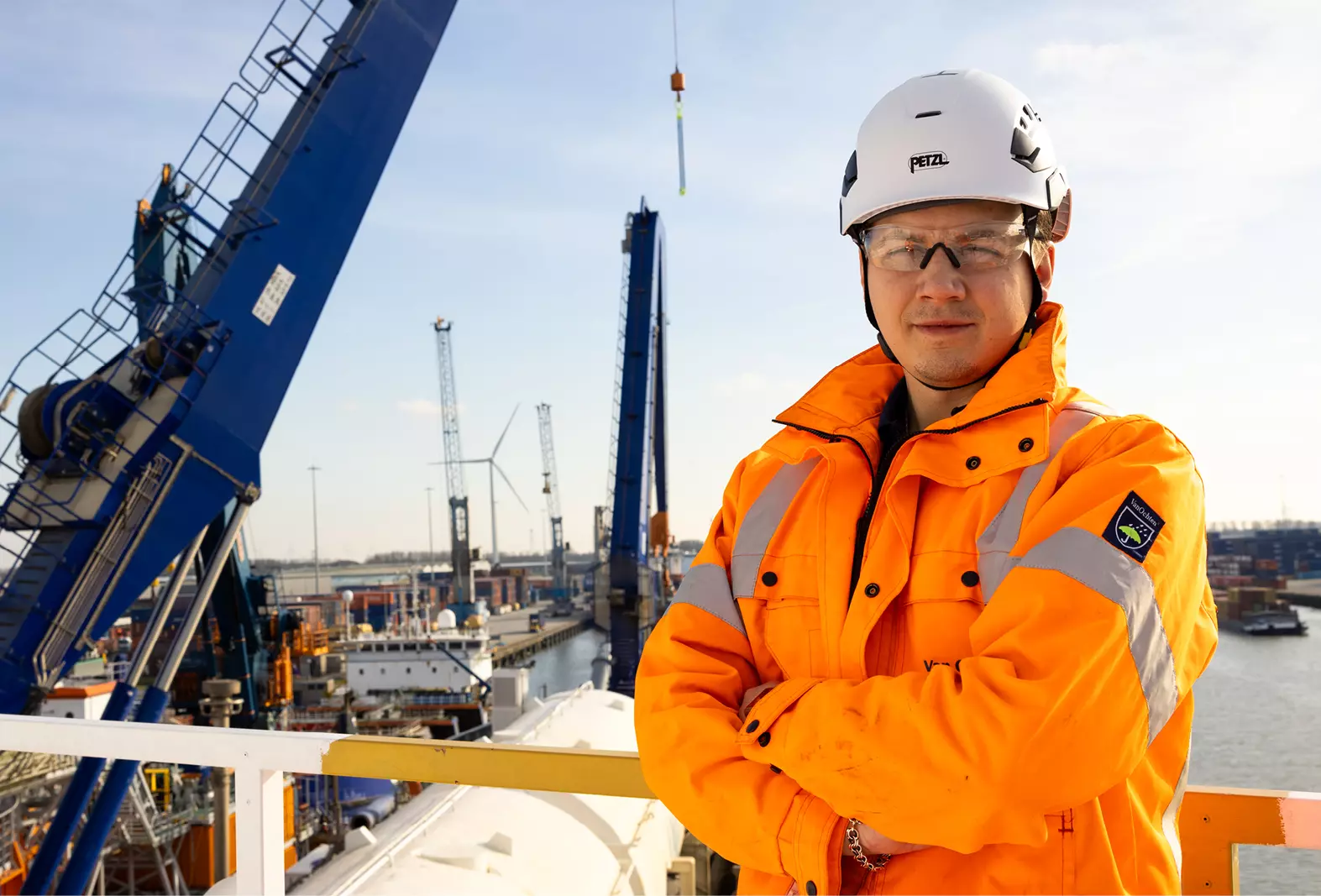
Thomasz
Engineer Production Automation

Tender Engineer Cables & Pipelines
- Gorinchem
- 40 hours per week
- Engineering, Tender Office
Senior Tender Engineer Cables & Pipelines
- Gorinchem
- From 32 hours per week
- Engineering, Tender Office
Graduation Thesis Infra Marine
- Rotterdam
- 40 hours per week
- Tender Office

Stay up-to-date and don’t miss
out on future jobs at van Oord!
This website uses cookies
We, and third parties, use cookies on our website. We use cookies to ensure that our website functions properly, to store your preferences, to gain insight into visitor behavior, but also for marketing and social media purposes (showing personalized advertisements). By clicking 'Accept', you agree to the use of all cookies. In our Cookie Statement. you can read more about the cookies we use and save or change your preferences. By clicking 'Refuse' you only agree to the use of functional cookies.